Pooli
- 4.4
- Rating
- 50.00K
- Installs
- Free
- Price

 Analysis by App-foxy
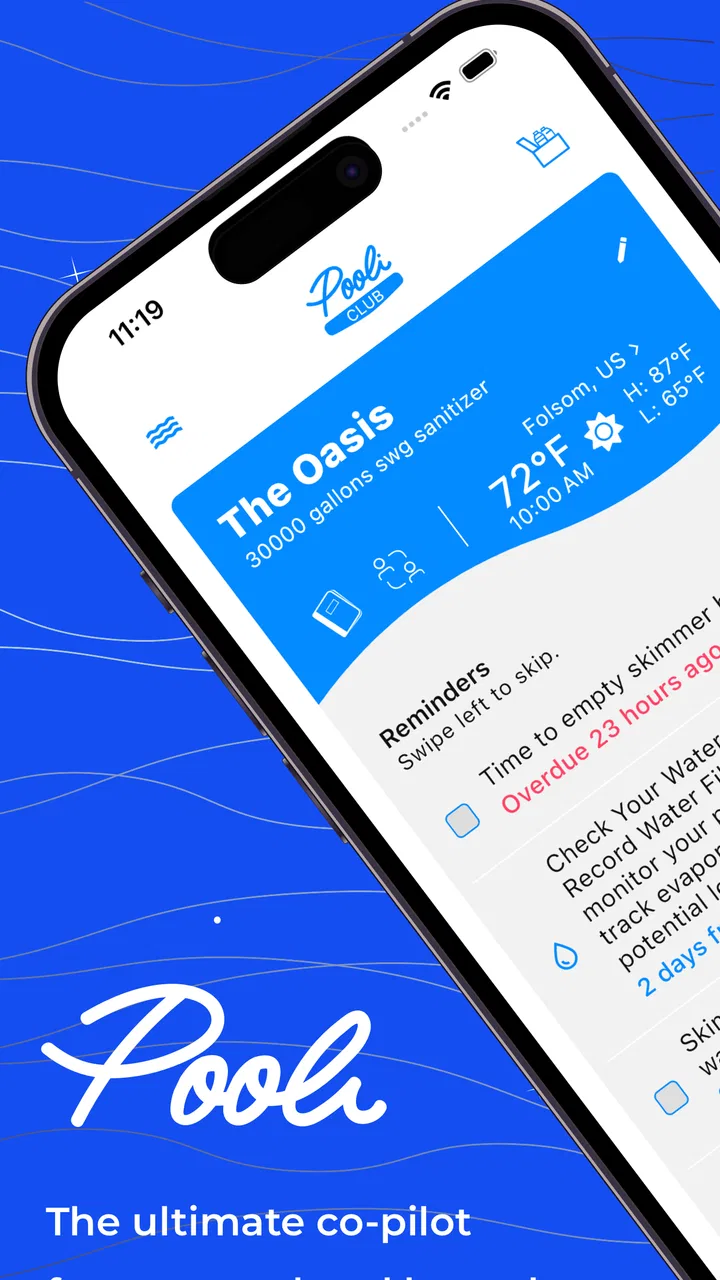
Pool care often becomes a scattered routine of reminders, test results, cleaning jobs, and seasonal decisions. I found Pooli most useful when I treated it as a simple home-maintenance companion rather than expecting it to replace every tool or every piece of pool equipment. It is a free House & Home app from Pooli, Inc., aimed at making regular pool upkeep easier to organize.
The appeal is straightforward: instead of keeping everything in my head or writing occasional notes, I can use one dedicated place to build a repeatable care habit. That matters most when the pool is not visibly dirty yet, because the important work is usually the work that prevents a small issue from becoming an expensive one. The app is suitable for Everyone, and its current version is 7.7.0 for devices running Android 8.0 or later.
I would recommend it to a pool owner who wants more structure without turning maintenance into a spreadsheet project. I would not recommend relying on it alone if you need professional water analysis, equipment diagnosis, or a substitute for reading chemical labels. Its strength is organization and routine, not magic.
You May Also Like

 AccuWeather: Weather Radar
AccuWeather Review: A Quick, Clear Forecast for Everyday Decisions
For everyday plans, the best forecast is the one you can understand quickly. AccuWeather makes rain timing, radar, and local conditions easy to act on, with a few trade-offs.

 Hill Climb Racing
Why Hill Climb Racing Still Turns Crashes Into One More Run
A tiny car, a bumpy hill and one more upgrade: Hill Climb Racing keeps resurfacing because its simple chaos makes every near-miss feel personal.

 AliExpress - Shopping App
AliExpress Makes Global Shopping Feel Personal, but Shoppers Bear the Risk
AliExpress turns a global marketplace into a pocket-sized discovery engine. Its reach is useful, its shopping loop compelling, and its trade-offs easy to miss.

 Lords Mobile: Kingdom Wars
Lords Mobile Is a Kingdom-Building Routine, Not a Quick Match
A case-by-case verdict on the building, battles, device demands, and social commitments that make Lords Mobile rewarding for some players and exhausting for others.

 PDF Scanner app - TapScanner
TapScanner Makes Paperwork Easier to Capture, Check, and Share
TapScanner makes scanning with a phone feel less like a rescue operation and more like a dependable step in getting work done. Its capture tools are useful, though not flawless.

 Block Blast!
 Shows How Much a Puzzle Game Can Leave Out
A quiet grid game shows why puzzle players increasingly value instant clarity, repeatable skill and low-pressure play—and where the genre still needs to catch up.
More From Our News Desk
View All News


Building a dependable pool-care routine
I find a dependable pool-care routine starts with deciding what deserves a reminder and what is better handled by observation. In this section, I’ll focus on keeping the plan realistic enough to follow through on, including how I would adapt it when the pool’s use or conditions change. That foundation also makes it easier to spot where setup, timing, or a missed check may be getting in the way.
Start with the jobs you actually repeat
My best results came from beginning with a realistic baseline instead of trying to document every possible pool task immediately. A useful routine separates the things I check frequently from the jobs that happen less often. Looking at the water, checking the surrounding area, observing circulation, and noticing debris belong to the first group. Filter-related work, deeper cleaning, and seasonal preparation belong to the second.
That distinction sounds basic, but it changes how an app like this feels. If I enter an oversized maintenance plan on the first day, I am more likely to ignore it later. If I use Pooli to support a small number of habits I already understand, it becomes much easier to return to. The app works best as a prompt for consistency, not as a reason to create a complicated schedule.
A practical first session would be to open the app before the next normal pool visit and identify what I already do. I can then use those actions as the foundation of the routine. After a week or two, I can add tasks that I repeatedly forget. This gradual approach is more useful than copying a generic checklist that may not match the pool, the weather, or the equipment.
Use it alongside physical checks
Pooli should sit beside the real inspection, not replace it. I still need to look at the water, notice unusual smells or cloudiness, inspect visible equipment, and follow the instructions for any test kit or treatment product I use. An app can remind me to perform a check, but it cannot see whether a pump sounds wrong or whether a test strip was used correctly.
This is one of the most important expectations to set. Someone who wants a digital log for regular care may find the app helpful. Someone looking for automatic readings from a sensor or a complete chemical recommendation system should compare it with dedicated pool-monitoring hardware or specialist services instead. The usual alternative to Pooli is not another app; it is often a paper notebook, a phone calendar, or memory. Against those options, a dedicated pool-care workflow is easier to keep focused.
A realistic week with Pooli
Imagine a busy week in which I use the pool after work and do not want maintenance to become another large project. Before the first swim, I check the routine I have established and deal with the obvious tasks. Later in the week, I return for the checks I tend to postpone. At the weekend, I handle the less frequent cleaning work while I have more time.
The value is not that the app makes those jobs disappear. The value is that the routine has a place to live. If someone else in the household helps with the pool, the same routine can also make the expected work clearer than a vague message such as “please check the pool.” That shared understanding is a small but meaningful advantage over relying on memory.
What to record mentally before customizing
Before changing settings or building a detailed habit, I would think about the pool’s actual rhythm. How often is it used? Which tasks are easy to forget? Which jobs depend on weather or visitors? Which checks are already covered by a separate device or professional service? Answering those questions prevents duplicated effort.
This is also where the app may not suit everyone. If the pool is managed by a service that already provides a clear maintenance record, Pooli may add another layer rather than simplifying anything. It is more compelling for owners who do at least part of the work themselves and want a consistent reminder system.
Settings worth checking before relying on reminders
The first settings I would review are the ones that affect how often I see maintenance prompts and how much information I am expected to manage. I prefer a schedule that reflects my real availability. A reminder that arrives when I cannot act is easy to dismiss, and repeated dismissal can make the whole system less useful.
I also pay attention to whether a task is genuinely recurring or only relevant under certain conditions. Routine cleaning can be planned, while a task triggered by heavy use, storms, or an unusual water observation needs judgment. I would avoid treating every reminder as an automatic instruction. The app can support a decision, but the decision still belongs to the person looking at the pool.
Because Pooli is free, it is approachable for someone who wants to try a structured method without committing money first. That makes experimentation easier: I can begin with a modest routine and see whether it improves my follow-through. The trade-off is that a free app should not be mistaken for a complete professional platform. My expectations remain focused on practical organization.
Keep reminders useful rather than noisy
One of the less obvious lessons is that more reminders do not necessarily create better care. I would rather have a short list that I consistently act on than a dense stream of prompts that makes the app feel like an obligation. If a task is already automatic in my household, it may not need the same emphasis as a task that is regularly missed.
I also find it useful to review the routine after a few cycles. If the same item is always postponed, that may indicate the timing is wrong, the task is too broad, or the job needs to be divided into smaller actions. This is a better adjustment than simply blaming myself for not following the schedule.
Use the app as a handoff tool
Pool maintenance often becomes confusing when several people share responsibility. One person may test the water, another may clean, and someone else may assume everything has already been done. A repeatable app-based routine can reduce that uncertainty by giving everyone the same reference point.
My suggested habit is to decide who owns each part of the routine before the pool becomes urgent. That does not require a complicated household system. It simply means avoiding vague responsibility. If I am the only person using the app, I can still use it as a personal handoff between “I noticed this” and “I actually completed it.”
Faster patterns for busy owners
Experienced use is less about opening Pooli for long sessions and more about making short visits count. I would keep the app close to the moment when maintenance happens: checking the routine before going outside, completing the physical work, and marking or reviewing the task while the details are still fresh. That reduces the chance of guessing later.
Another efficient pattern is grouping work by location. When I am already beside the pool, I can handle the visual inspection and nearby cleaning together instead of spreading tiny tasks across the day. The app helps me remember the group, while the physical workflow keeps me from walking back and forth for one forgotten item.
A third pattern is to use a weekly reset. I would look ahead at the routine, notice any tasks that were skipped, and decide whether they still matter now. This prevents old reminders from becoming background noise. It also makes the app reflect the pool’s current condition rather than an idealized plan created weeks earlier.
Pair the routine with a separate test method
Pooli is most effective when I separate “remember to test” from “interpret the test.” A test kit, strips, or professional analysis may provide the actual reading, while the app helps ensure that the check happens at the right point in the routine. That division keeps the app useful without asking it to perform work it was not designed to perform.
When I do take a reading, I would avoid making a rushed treatment decision simply because a reminder appeared. I would follow the test product’s instructions, consider recent use and weather, and use only the appropriate product guidance. The app can improve timing; it should not encourage careless dosing.
Use seasonal thinking without over-automating
Pool care changes with the season, but not every seasonal change should become a permanent daily reminder. I would adjust my routine when use increases, temperatures shift, or preparation for a quieter period begins. The important point is to review the plan when circumstances change instead of assuming that one schedule fits the entire year.
This is a useful trade-off compared with a paper checklist. Paper is flexible but easy to lose or forget; an app is easier to revisit but can tempt me to follow a fixed pattern too literally. My preferred approach is to let Pooli hold the structure while I make the seasonal judgment.
Advanced limits: where the app stops helping
The app cannot compensate for missing pool knowledge. If I do not know what a reading means, I need reliable guidance from the test manufacturer, a qualified pool professional, or the equipment documentation. A reminder system can make me more punctual, but it cannot make an unsafe chemical decision safe.
It is also not the right answer for every equipment problem. A change in pump noise, a leak, poor circulation, or a persistent water issue needs inspection and possibly professional attention. I would use Pooli to remember that the issue needs follow-up, not to assume that a scheduled task has solved it.
Another limitation is behavioral: the app depends on me opening it and acting on what I see. If I dislike reminders, rarely carry out my own maintenance, or expect automatic monitoring, the experience may feel like extra administration. In that case, a service plan or connected equipment may be a better fit, even if it costs more or offers a different kind of convenience.
Who should choose it, and who should skip it?
I see Pooli as a good match for hands-on pool owners, households sharing routine responsibilities, and people who repeatedly remember maintenance only after the pool starts looking neglected. It is also a sensible low-risk starting point for anyone curious about a dedicated pool-care app because the price is free and the age rating is Everyone.
I would skip it if I want a technical diagnostic platform, automatic sensor readings, or a replacement for professional service. I would also skip it if my existing calendar and notes already give me a clear, reliable system and I do not want a separate place for pool tasks. Adding an app is worthwhile only when it removes friction rather than creating another inbox to check.
How it compares with the usual alternatives
A notebook offers total freedom and works without learning an interface, but it depends heavily on remembering to open it and keeping entries understandable. A general calendar is strong for appointments and repeating reminders, yet it lacks the focused context of pool care. Pooli sits between those choices: more specific than a calendar and more structured than loose notes.
Professional service is different again. A technician brings experience, equipment knowledge, and physical inspection, while Pooli gives me a way to stay involved between visits. I would not frame the app as a replacement for that expertise. For many owners, the best arrangement could be a personal routine for everyday awareness plus professional help when the problem exceeds normal upkeep.
The app’s public response is encouraging without being overwhelming: it holds a 4.4 average from around 320 ratings, with more than 140 written reviews and over 50 thousand installs. I read that as evidence that the basic idea is working for a meaningful group of users, while still leaving room for each owner to decide whether its workflow suits their habits.
My verdict after using it as a routine, not a shortcut
Pooli is at its best when it turns pool care into a repeatable habit. I like it because it encourages me to move from vague intentions to specific checks, and because its free entry point makes it easy to test without a financial commitment. The most useful results come from keeping the routine realistic, reviewing it regularly, and combining it with proper physical inspection and testing.
It is not a substitute for knowledge, equipment manuals, chemical instructions, or a professional when something looks wrong. That limitation is important, but it does not undermine the app’s central value. A reminder and organization tool does not need to diagnose every problem to help prevent neglected routine work.
For a friend who manages a pool personally, I would suggest starting small: create the few tasks that genuinely matter, check the timing, and use the app during the real maintenance visit rather than treating it as a separate administrative chore. If that habit makes missed work less common, Pooli has earned its place. If I still want automatic measurements or expert intervention, I would choose a more specialized option instead.
Overall, Pooli is a practical House & Home app from Pooli, Inc. with a clear audience: people who want a simpler way to stay consistent. Its rating of 4.4 and its growing user base make it worth trying, but the real test is personal. If a focused routine helps me act sooner and remember more, the app is useful. If I need automation or diagnosis, I should look beyond it.
FAQs for Pooli
01What is Pooli and what does it offer?
Pooli is a mobile application designed to enhance your pool management experience. It offers features like water testing, maintenance reminders, and chemical balance recommendations. Available for both Android and iOS, Pooli aims to simplify pool care, making it easier for users to ensure their pool remains clean and safe.
02Is Pooli compatible with all pool types?
Yes, Pooli is designed to be compatible with a wide range of pool types, including in-ground, above-ground, and saltwater pools. The app provides tailored recommendations based on the specific needs of your pool, ensuring effective management regardless of the pool type you own.
03How user-friendly is the Pooli app for beginners?
Pooli is highly user-friendly, making it suitable for both beginners and experienced pool owners. The app features an intuitive interface with easy-to-follow instructions and tutorials. Users can quickly learn to navigate the app’s features, ensuring they can manage pool maintenance tasks efficiently from the start.
04Does Pooli require any specific hardware or devices?
Pooli primarily functions as a software-based application and does not require any specific hardware. However, for accurate water testing, users may need compatible test kits or strips, which can be used alongside the app's testing features to ensure precise chemical readings and recommendations.
05Is there a cost associated with using Pooli?
Pooli offers a free version with basic features, but to unlock advanced functionalities, users may need to purchase a subscription or one-time upgrade. This premium version includes enhanced features such as detailed analytics, personalized maintenance plans, and priority customer support. Pricing details are available within the app.
Pros
- User-friendly interface for all ages.
- Realistic graphics enhance gameplay experience.
- Wide variety of game modes available.
- Multiplayer option for competitive play.
- Regular updates with new features.
Cons
- In-app purchases can be costly.
- Occasional ads disrupt gameplay.
- Requires internet for some features.
- High battery consumption during play.
- Limited customization options.

Pooli
Gallery